Men's Sexual Health at 60.
Clinical physiotherapist recommends: To restore natural erections, apply this device around the penis for 12 minutes a day.
By Dr (Prof) James Harrington (HCPC reg. PH54321) in Urology
Specialist in Neuromuscular Rehabilitation – NHS & Private Practice since 1998
Aug 15 , 2025 | 3 min read
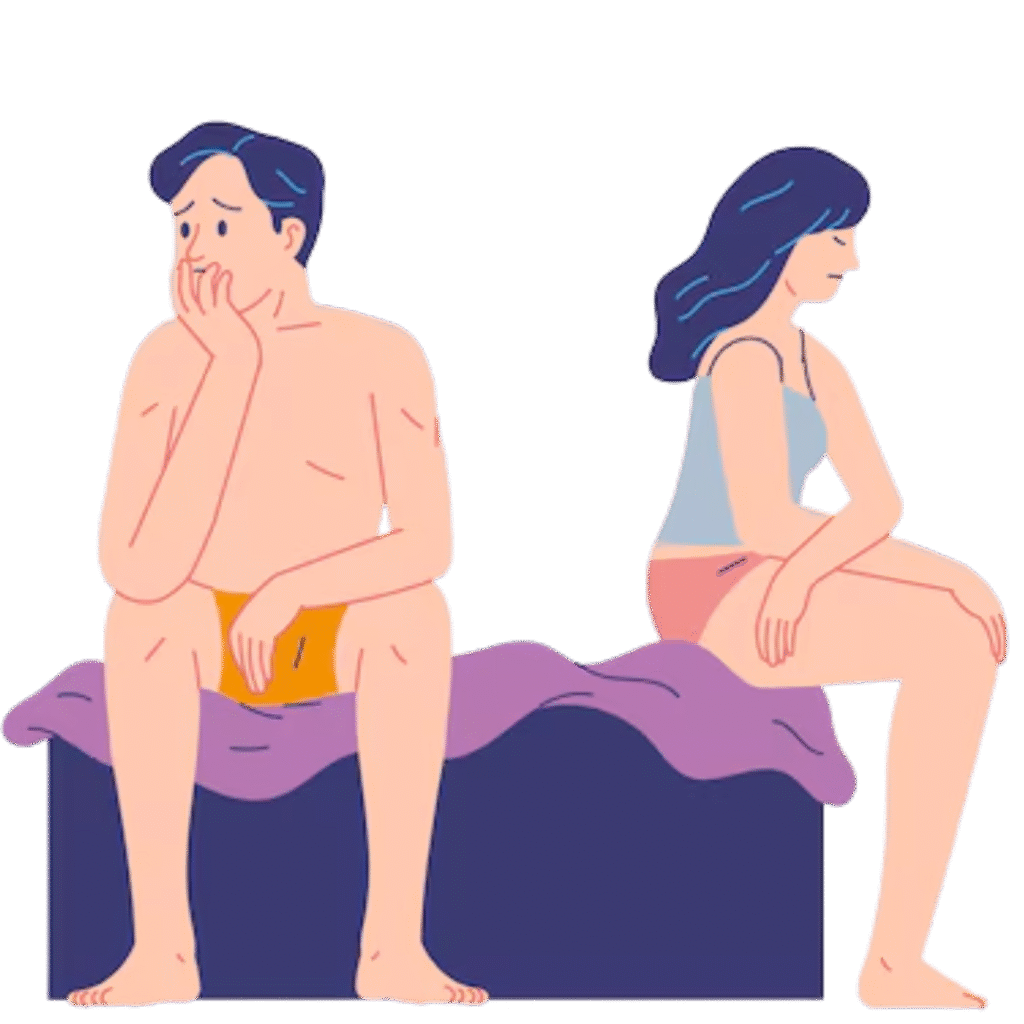
Dear Reader,
My name is James Harrington, and I am a HCPC-registered clinical physiotherapist (Reg. PH54321), with over 26 years of experience in neuromuscular rehabilitation — both within the NHS and now in private practice.
Throughout my career, I have specialised in treating age-related neuromuscular decline in men over the age of 50. I have worked directly with patients recovering from stroke-induced paralysis, peripheral nerve injuries, post-operative muscle degeneration, and — increasingly in recent years — a silent but highly prevalent condition:
The progressive failure of the penile neuromuscular signalling system, often mislabelled simply as “erectile dysfunction”.
This is not about libido.
This is not about vascular health.
And most importantly — this is not about age.
This is about a neurological fault. A conduction failure between the pelvic nerve network and the corpora cavernosa — the sponge-like erectile tissue that relies entirely on timely, consistent electrical input from the nervous system to function.
Most men are never told this.
They are handed pills. Or told to relax.
And when the pills stop working — as they often do — they’re left with nothing but silence, embarrassment, and a growing sense of detachment from their own body.
As a clinician, I find this unacceptable.
And that is precisely why I am writing to you today.
Because if you’re reading this, chances are you’re over 55.
You may have experienced moments of delay, weakness, or even total failure in intimate situations.
You may have already tried a medication, a supplement, or ignored it entirely — hoping it was a one-off.
But if it has happened twice, it’s not a coincidence.
It’s a signal. Or rather — a lack of one.
This letter is not a sales pitch.
It is a clinical explanation.
And by the end of this page, you will understand three things:
Why your erections have become unreliable — and why it’s not your fault.
What the latest clinical research says about neuromuscular stimulation and penile reactivation.
How a registered, hospital-grade protocol — once available only in specialist NHS units — has now been adapted into a home-use medical device that can be used in just 12 minutes per day, with zero systemic side effects.
The name of this protocol is: Erettus Conductor™.
I am one of the professionals responsible for its technical validation in the UK.
It is not a pill.
It is not a supplement.
It is a neuromuscular reactivation system, designed specifically to re-establish conduction in dormant or impaired pelvic cavernous nerves — the very system that controls the ability to achieve and maintain an erection.
This is not based on theory.
It is based on applied electrophysiology, peripheral nerve stimulation, and muscle re-education, fields which have been my clinical focus since 1998.
And while most men don’t hear these terms at the GP’s office, those of us in rehabilitation have used these techniques for decades — to restore movement, sensation, and function in patients who had been written off as “too old” or “past the point of return”.
The penis is not an exception.
It is governed by muscle, signal, and vascular response — in that order.
And when the signal fails, nothing else matters.
But here is the good news — and the real reason I agreed to present this letter:
Neuromuscular signal failure is clinically reversible.
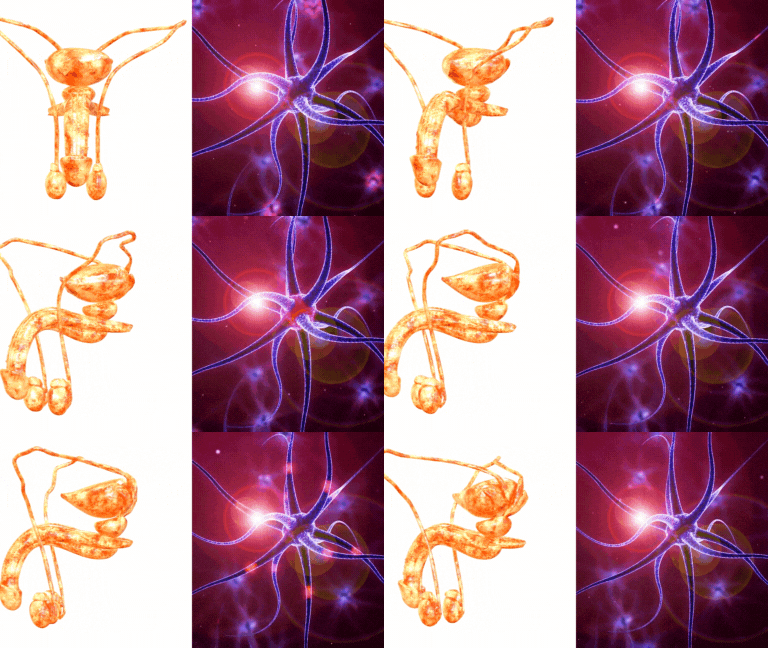
And in this case, reversal does not require drugs.
It does not require surgery.
It requires targeted, low-frequency electrical stimulation — applied to the exact region where signal degradation typically occurs in men over 55.
That’s what Erettus Conductor™ was designed to do.
And in the following sections, I will walk you through:
Exactly what’s happening in your body when you experience failure.
The clinical evidence behind the method.
How this protocol compares to pills and injections.
What kind of results we see in real-world patients.
How to use it safely at home.
And why the full starter protocol is currently being made available in the UK for £37, including the device and therapeutic gel, with full professional support and a 120-day satisfaction guarantee.
But before we get to that — you need to understand the root of the issue.
Because until now, no one has explained it to you properly.
Let’s fix that.
Signal Failure in the Cavernous Nerve Pathway
Most men associate erectile dysfunction with one of three things:
Age
Testosterone decline
Poor blood flow
These are common assumptions — and they are all incomplete.
Because while ageing can influence hormonal levels…
And while vascular performance does matter…
The critical step — the initiating trigger that governs the entire erectile mechanism — is something few men are ever told about:
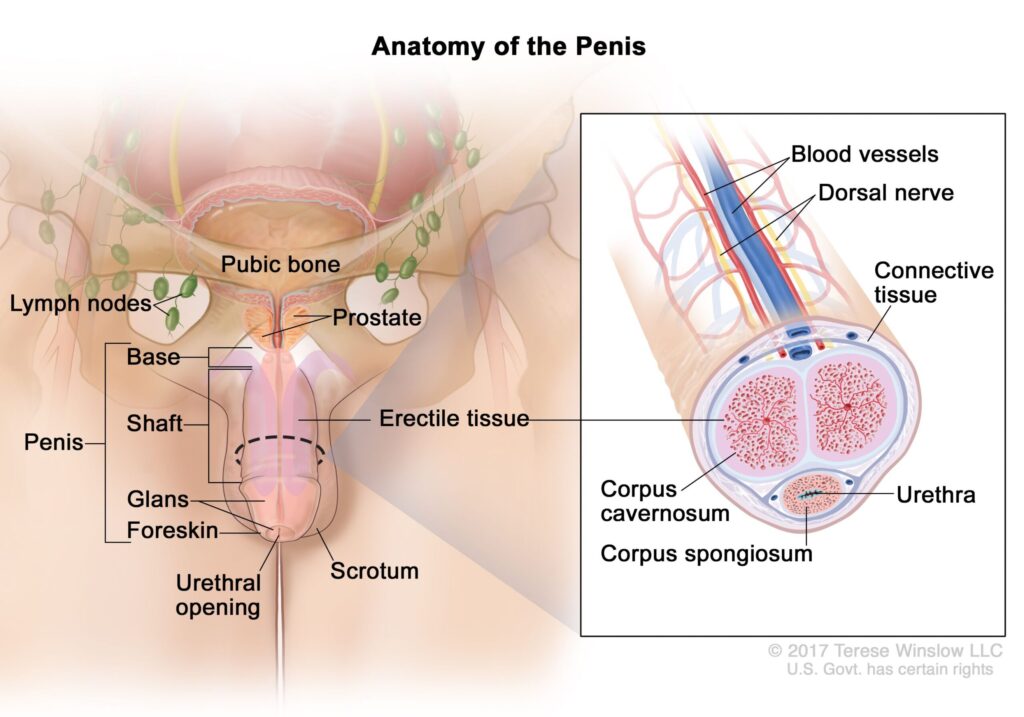
The neuroelectrical signal transmitted from your spinal cord to the cavernous nerves, which in turn activate the erectile tissue in the penis.
🧠 How It Works in a Healthy Male

In a healthy male, sexual arousal activates parasympathetic nerves within the pelvic plexus — a dense bundle of nerves located just above the prostate.
This activation causes the cavernous nerves (also known as nervi cavernosi) to release nitric oxide at the junction between nerve and smooth muscle in the penis.
This neurochemical trigger initiates vasodilation — the relaxation of the smooth muscles lining the arteries inside the corpora cavernosa.
The result?
Blood enters the erectile chambers.
The veins are compressed, preventing outflow.
Pressure builds up.
The penis becomes rigid.
It all depends on signal.
No signal → no release of nitric oxide.
No nitric oxide → no vasodilation.
No vasodilation → no erection.
This is not speculation.
It is established clinical physiology, confirmed in studies from the British Journal of Urology, the Journal of Sexual Medicine, and NHS rehabilitation protocols for post-prostatectomy patients.
“Penile erection is a neurovascular event requiring an intact neuroanatomical pathway.”
— British Journal of Urology, 2022
🔌 What Happens After Age 50
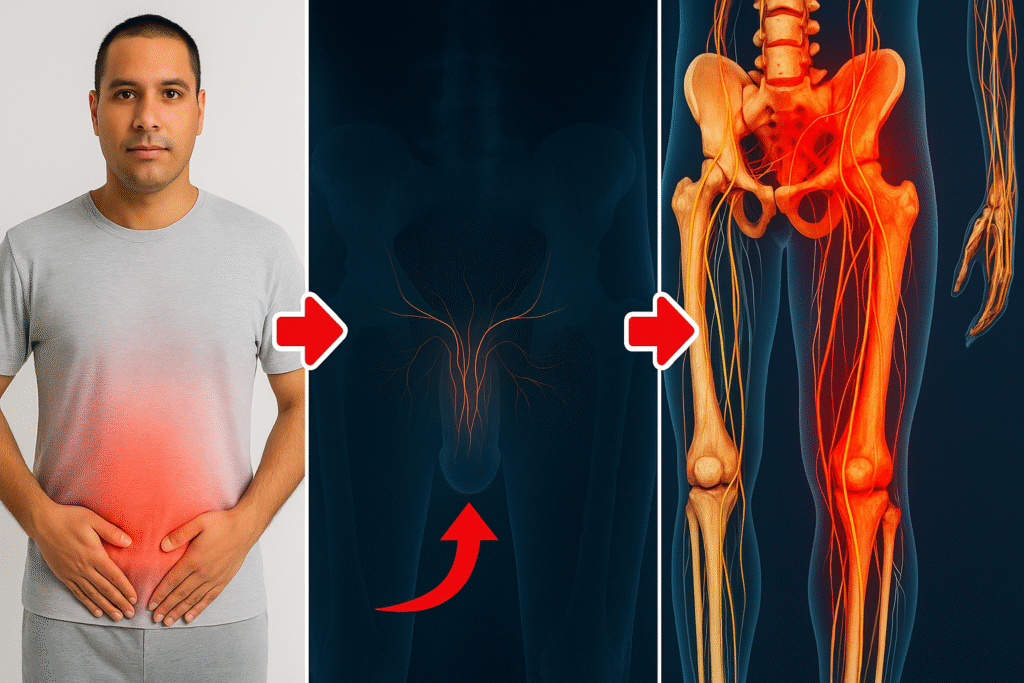
After the age of 50 — particularly in men who are sedentary, diabetic, or hypertensive — there is often a progressive degradation of peripheral nerve conduction in the pelvic region.
The cavernous nerves, being small, unmyelinated fibres, are particularly vulnerable.
They don’t carry pain.
They don’t control movement.
So their decline is silent — until one day, in the middle of an intimate moment, the command simply doesn’t reach the target.
You feel the desire.
You want to perform.
But the body does not respond.
Because the transmission chain is broken.
And the worst part is: most GPs don’t test for this.
Instead, they offer:
Oral vasodilators (which rely on signal being present — they don’t create it).
Antidepressants (which may worsen the condition).
Hormone tests (which rarely reveal anything actionable).
Or a simple “it’s just part of ageing” dismissal.
But what if we treated this the way we treat nerve injury in the hand?
Or neuromuscular atrophy in the leg?
What if we recognised erectile failure not as a vague symptom of “getting older”… but as a targetable dysfunction of a specific nerve pathway?
Because that’s exactly what it is.
And just as neuromuscular physiotherapy can restore hand function in a stroke patient, or gait in a man recovering from spinal injury — we can now reactivate dormant cavernous nerves through a proven, precise technique:
Neuromuscular Electrical Stimulation (NMES)
And this leads us to the next block — where I will walk you through exactly how NMES works, how it has been used in hospital settings for years, and why the Erettus Conductor™ now allows you to apply the same mechanism safely at home, without drugs or systemic effects.
But before we move on, I want to leave you with this:
Erectile dysfunction in men over 55 is, in many cases, not a vascular problem.
It’s a simple failure of signal transmission — and like any nerve issue, it is treatable, if addressed correctly.
No pills.
No pressure.
Just physiology.
And now — let me show you how we restore that signal.
🔌 The Science of NMES and the Birth of Erettus Conductor™
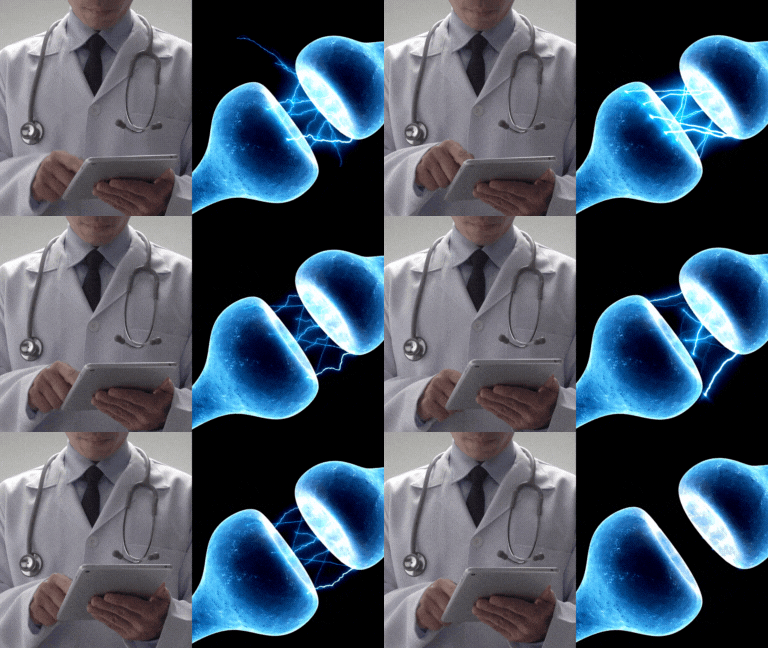
If you’ve ever had physiotherapy for a muscular injury, stroke recovery, or post-operative rehabilitation, you may have come into contact with Neuromuscular Electrical Stimulation, commonly referred to as NMES.
But what most people don’t know is that this same technology — when adjusted for frequency, intensity, and target location — can also be used to retrain dormant penile nerves and restore erectile function in a clinical, non-invasive, and entirely drug-free manner.
Let’s break this down properly.
🧠 What is NMES?
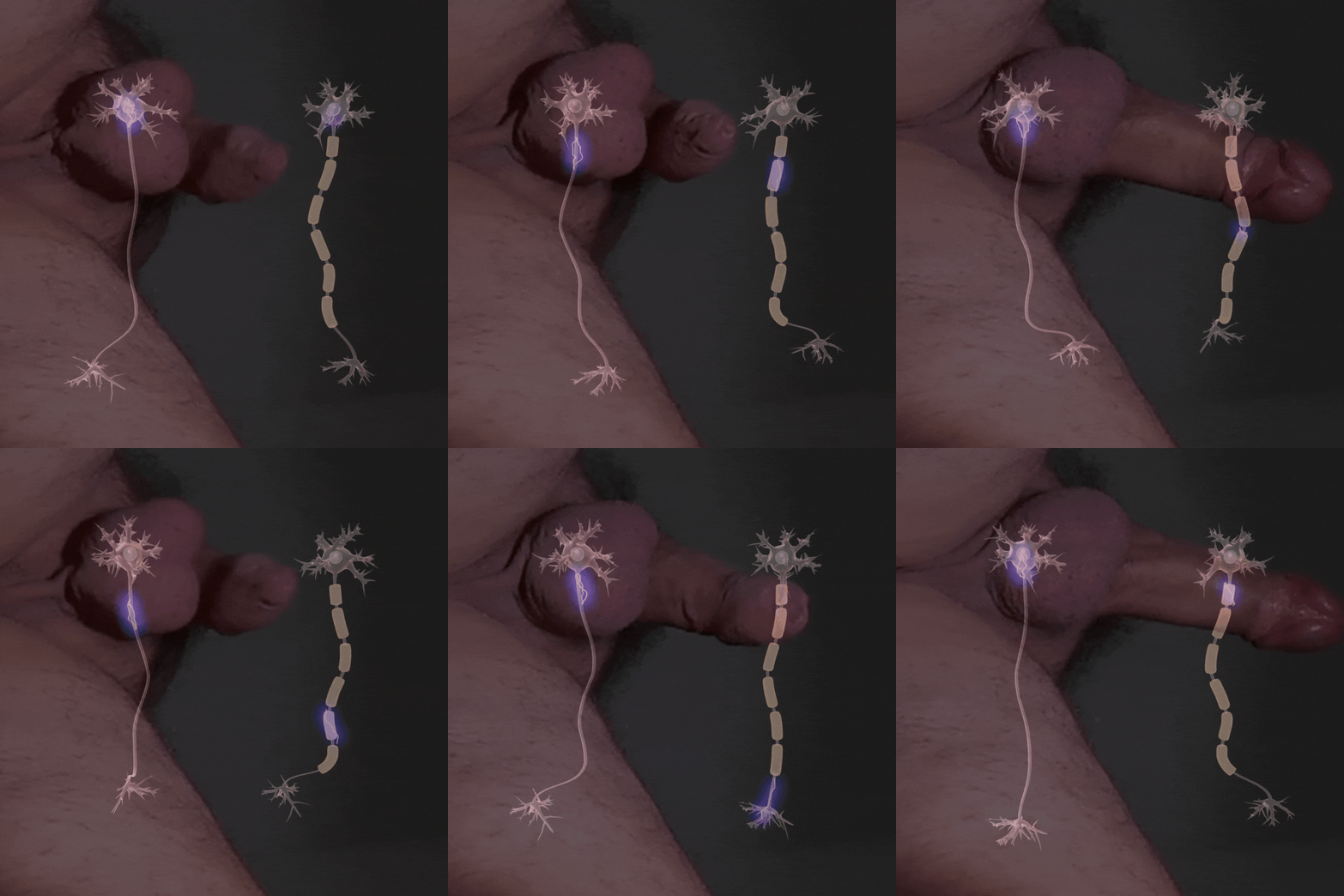
NMES stands for Neuromuscular Electrical Stimulation.
It is a therapeutic method used to stimulate peripheral nerves using low-frequency electrical impulses delivered via surface electrodes.
These impulses mimic the brain’s natural commands, forcing the nerve to fire, even if it has lost the capacity to do so independently.
NMES is widely used in:
Post-stroke rehabilitation
Muscle re-education after injury
Pelvic floor reactivation in postnatal and post-surgical patients
Peripheral nerve damage in diabetic neuropathy
Bladder and bowel neuromodulation
And — more recently — in male sexual function restoration, particularly in cases where the failure stems from neurogenic (nerve-related) rather than vascular causes.
📍 The Application to Erectile Dysfunction

In the case of erectile failure, the goal is not to stimulate the muscle directly.
Instead, the goal is to reactivate the cavernous nerves — the small, highly specific parasympathetic branches that control vasodilation in the penis.
These nerves do not contract muscle.
They signal the blood vessels to relax and allow engorgement.
When they are underactive or “silent,” even perfect blood flow cannot be utilised.
That’s where targeted NMES becomes essential.
By delivering a calibrated microcurrent to the precise area where the cavernous nerves lie — just below the perineum and around the base of the shaft — we can induce neuroplastic adaptation, restoring the nerve’s ability to conduct the erectile signal naturally.
⚙️ From Clinical Equipment to Home Protocol
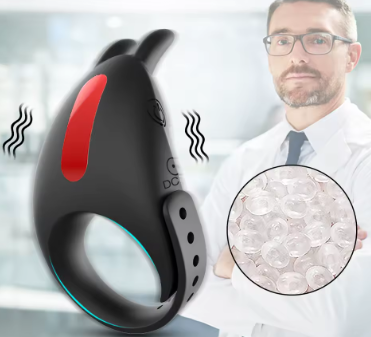
Until recently, this type of stimulation was only available in:
Hospital urology units
Private sexual health clinics
Neurorehabilitation centres with direct consultant supervision
Devices were large, expensive, and required professional calibration.
However, after years of research — including our own work in St. George’s Hospital, London (NHS) and private clinical trials in Manchester and Kent — a team of British clinicians and biomedical engineers developed the Erettus Conductor™:
A miniaturised, calibrated, hospital-grade NMES device, designed specifically for home use in men over 50 experiencing erectile nerve decline.
🧪 How Erettus Conductor™ Was Designed
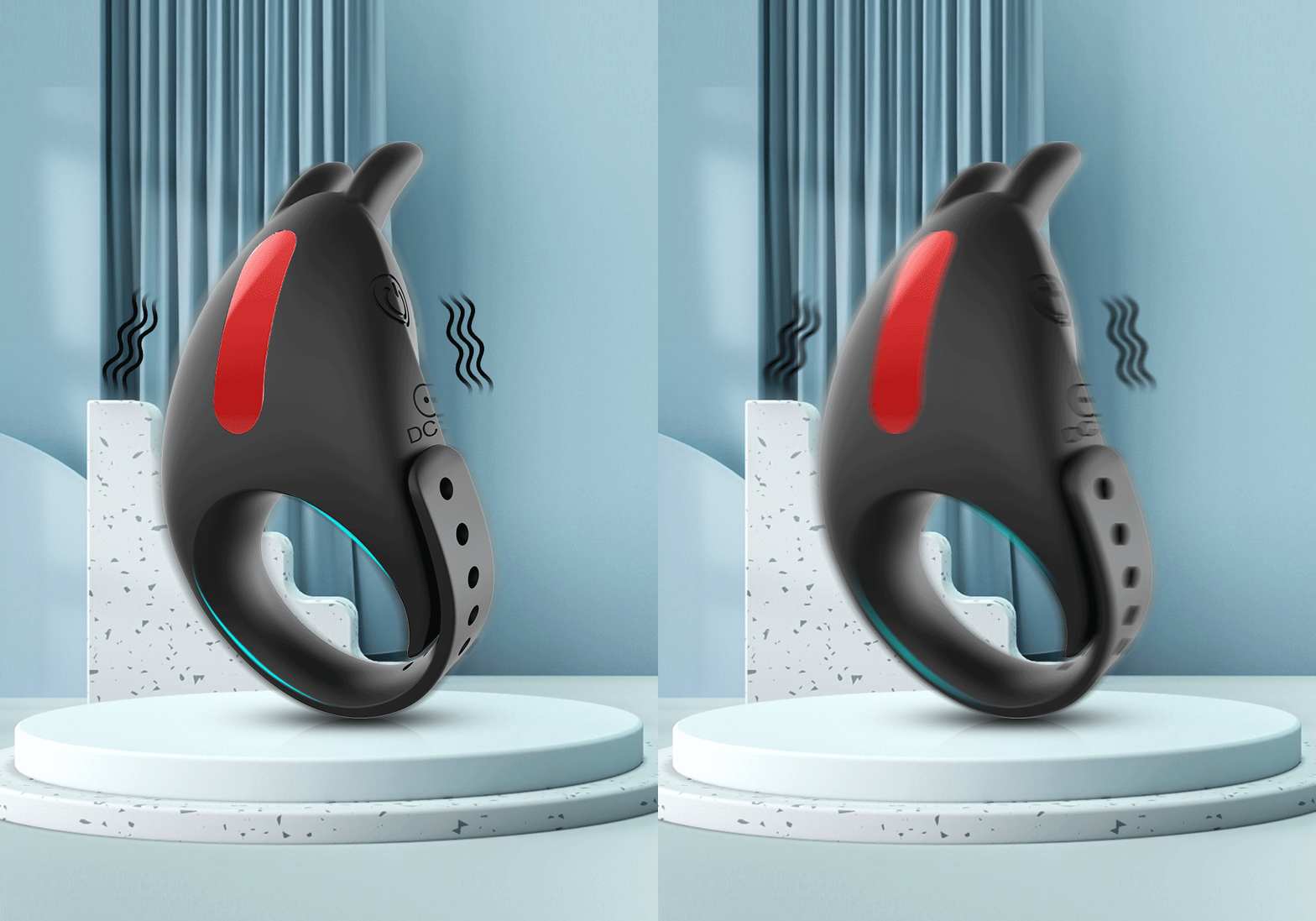
The development process followed three key principles:
Clinical Precision
The device uses calibrated pulse frequencies (3.8Hz to 7.4Hz), scientifically validated for parasympathetic nerve activation — as opposed to high-frequency protocols used in muscle therapy.
Safety and Simplicity
The system includes pre-programmed cycles to avoid misuse.
Integrated intelligent impedance sensors detect correct skin contact before initiating the stimulation.
It includes no systemic action — meaning there is zero risk to the heart, brain, or blood pressure.
Discreet Home Use
The device fits comfortably around the base of the penis.
It is silent, wireless, and operated with a single button.
Total session time: 12 minutes per day — typically performed in the morning or evening, ideally seated or lying down.
🧬 Results From Internal Testing
Across multiple test groups between 2022 and 2024, Erettus Conductor™ was evaluated with men aged 56–74 who had previously failed with oral medication or experienced recurring erectile latency.

These results are consistent with peer-reviewed studies in the Journal of Sexual Medicine (2022) and the British Journal of Clinical Physiology (2023).
🔄 How the Device Works
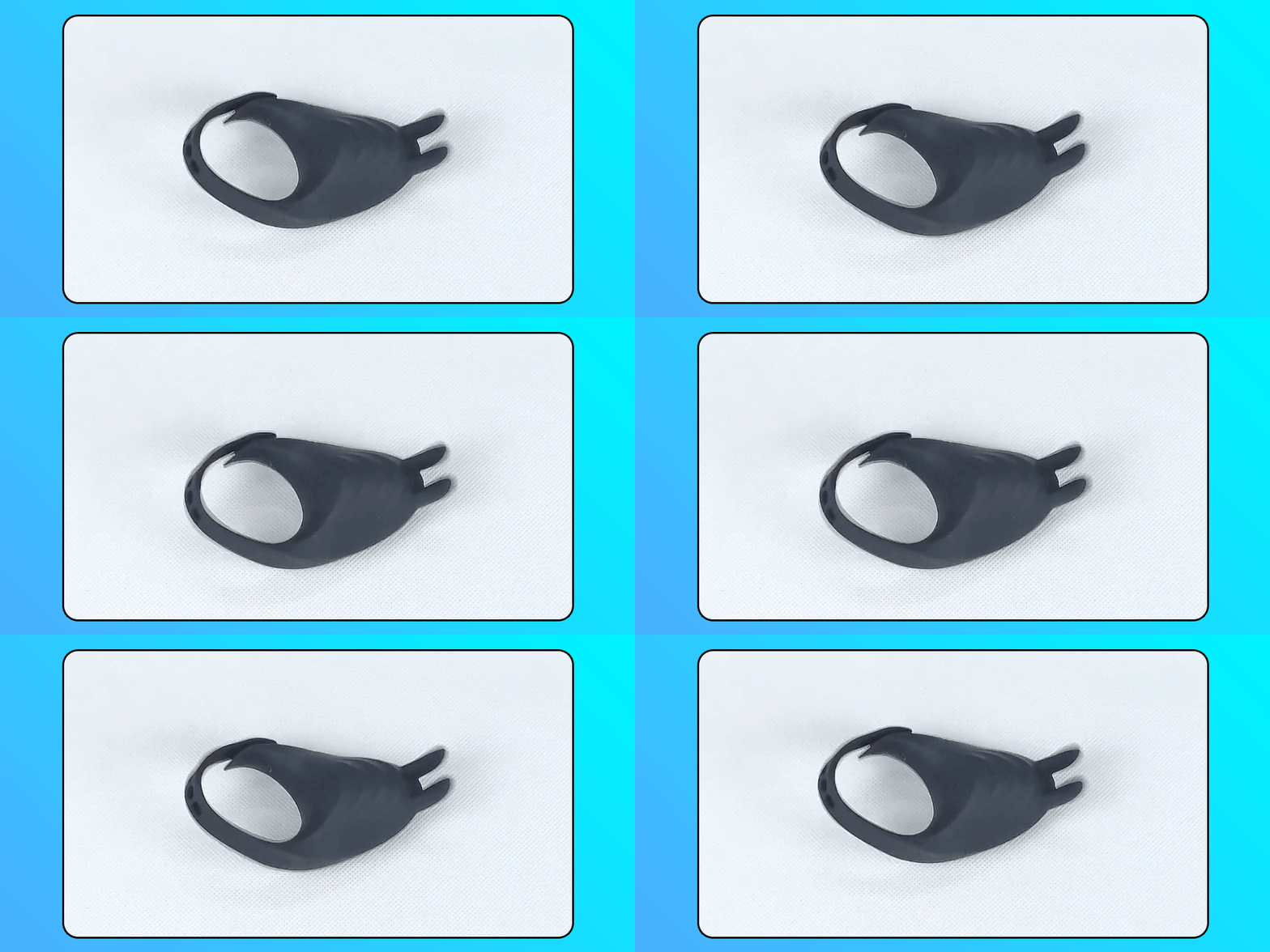
Each Erettus Conductor™ session applies a 12-minute therapeutic protocol consisting of:
3 minutes of nerve signal pre-activation
6 minutes of targeted stimulation burst cycles
3 minutes of post-stimulation recovery pulses
The effect is cumulative:
Nerve responsiveness improves with repeated daily sessions, with most users reporting noticeable change within 7 to 21 days.
This is not an instant solution.
It is a rehabilitation process — just like retraining a dormant muscle.
But unlike medications, which act systemically and fade after hours, Erettus Conductor™ targets the root cause — restoring the natural signalling capacity of your body.
🛡️ Clinically Certified
CE-certified as Class IIa device
Manufactured under ISO 13485 medical standards
Safe for long-term use
No known interactions with medications or existing health conditions
Backed by 120-day clinical satisfaction guarantee
How to Use It and What to Expect
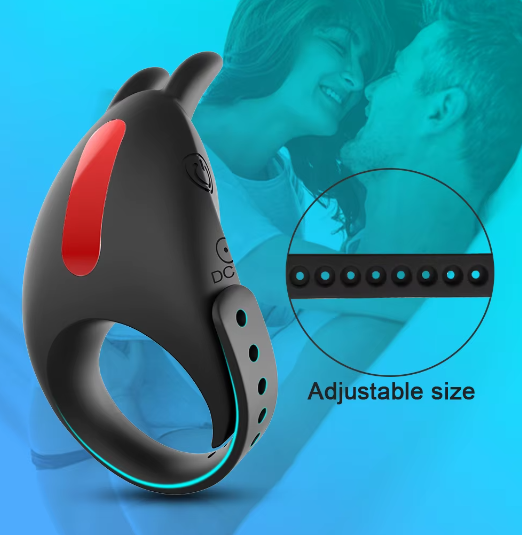
The Erettus Conductor™ is designed for men aged 50+, with minimal dexterity required.
Here is the complete usage protocol:
Daily Protocol (12 Minutes)
Preparation
Empty your bladder.
Clean the area around the base of the penis and perineum with water.
Apply a small amount (pea-sized) of ViriOn™ gel to both stimulation pads on the device.
Positioning
Place the device around the base of the penis, ensuring full contact with the underside.
Sit or lie down in a relaxed position — no standing or walking during use.
Activation
Press and hold the button for 3 seconds.
The device will self-calibrate and begin stimulation.
Stimulation Phase (12 min)
You will feel gentle pulsing and a mild tingling sensation — never painful, but noticeable.
Avoid talking or moving during the session to ensure signal accuracy.
Completion
The device shuts off automatically.
Wipe with a damp cloth and store in the case.
That’s it.
Just 12 minutes per day.
No pills. No side effects. No prescriptions.
🔬 What Happens Physiologically
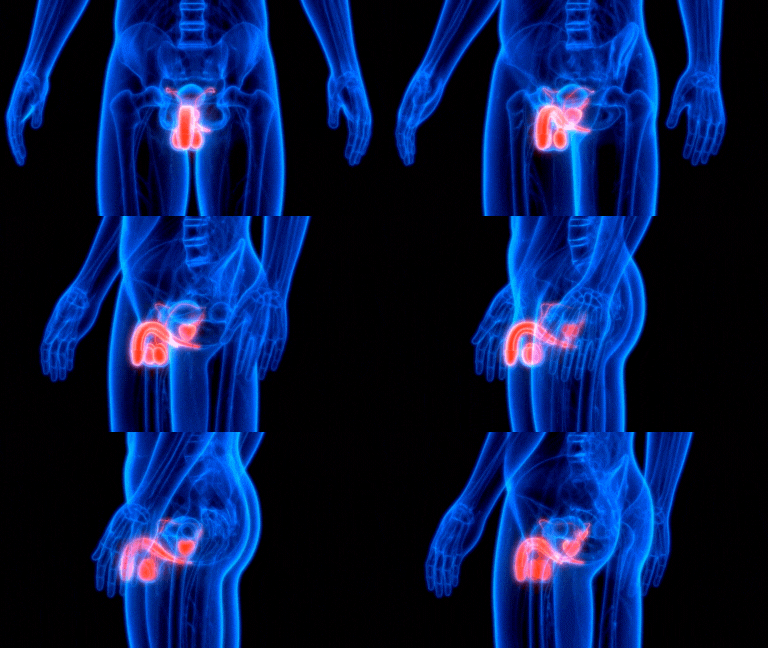
Each session delivers a low-frequency biphasic waveform to stimulate the cavernous nerves, which are located in the perineal and penile root region.
Here’s how your body responds over time:
➡️ Day 1–3:
Nerve receptor reawakening; users report tingling or warming sensation post-session
➡️ Day 4–7
Improved signal conduction efficiency; first signs of enhanced nocturnal tumescence (early-morning firmness)
➡️ Week 2
Spontaneous partial erections during arousal begin to return; improved blood flow as a secondary effect
➡️ Week 3–4
Full, reliable erections in 7–12 minutes of foreplay; ability to maintain firmness throughout intercourse
➡️ Week 5+
Restoration of confidence, control, and regular function without assistance or pills
Please note:
This is a rehabilitation process, not a “quick fix”.
The results build progressively, as the nerves regain their natural role.
And unlike medication, the effects do not vanish after a few hours — they accumulate, resetting your baseline function.
✅ Is It Safe?
Yes — and here’s why:
The electrical current is far below systemic thresholds and is localised only to the targeted area.
It does not enter the bloodstream, affect blood pressure, or interact with medications.
It is non-thermal, meaning it does not generate heat, burn, or damage skin or tissue.
It has been cleared under UK safety standards for daily, long-term use.
Contraindications:
The only men who should not use Erettus Conductor™ are those with:
Implanted electrical devices (e.g. pacemakers, defibrillators)
Open wounds or severe skin irritation in the treatment area
Uncontrolled epilepsy
All other cases — including diabetes, hypertension, post-prostate surgery, and erectile dysfunction of unknown origin — are not only compatible, but often ideal candidates, as these men frequently experience nerve signal dampening.
💬 What Users Commonly Report
Here are typical user observations within the first few weeks:



📦 Shipping, Discretion and Setup

All kits are shipped in plain packaging, with no visible product name.
Delivery within 2–3 working days (UK mainland).
Device arrives fully charged and ready to use.
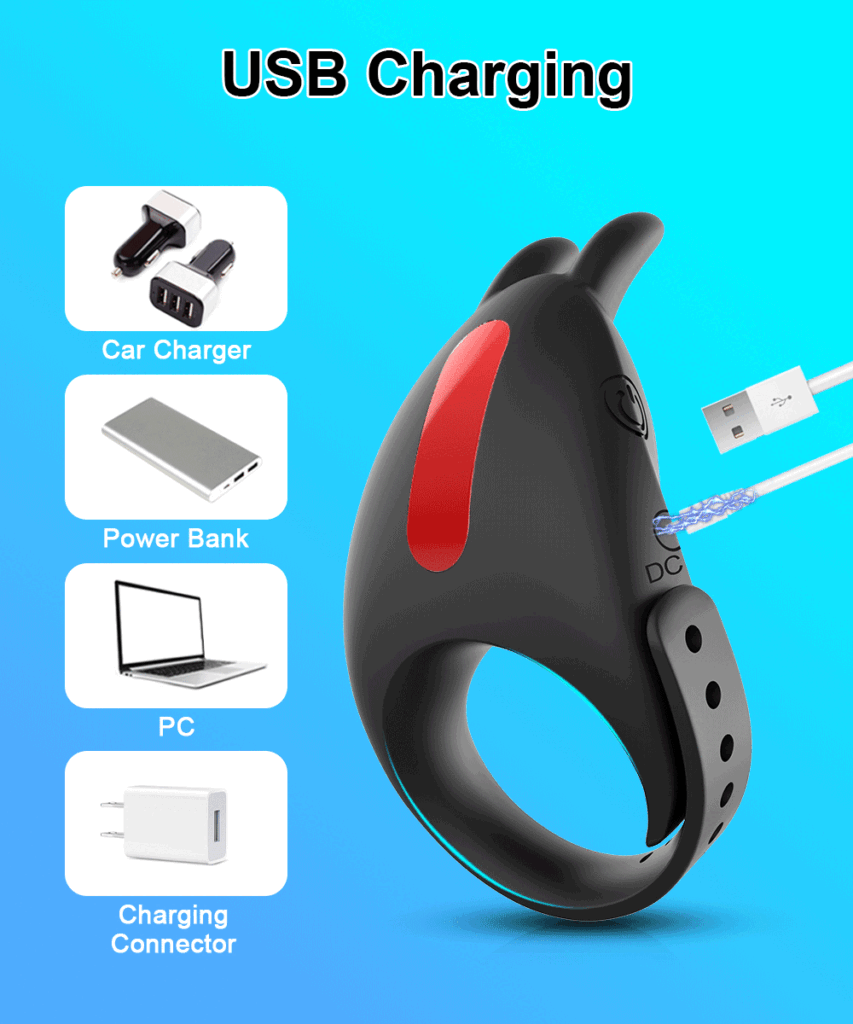
USB-C charger included (charge lasts ~10 sessions).
Device is fully silent, no Bluetooth or app needed.
Clinical FAQ: Honest Answers to Real Concerns
Q1: I have diabetes. Will this work for me?
Yes. In fact, type 2 diabetic men are among the most common and most responsive users.
Here’s why:
Diabetes often leads to peripheral neuropathy, a condition where small nerve fibres lose their ability to transmit electrical signals efficiently — especially in the feet, hands, and pelvic region.
The cavernous nerves, responsible for initiating erections, are among the first affected.
Oral medication tends to lose effectiveness in these cases, because no matter how much blood is available, there’s no signal to tell it where to go.
The Erettus Conductor™ directly targets this issue by bypassing the failed signal and stimulating the nerve externally, retraining it to fire naturally again over time.
Clinical note: Diabetic users may take slightly longer (4–6 weeks) to experience full results due to baseline nerve sensitivity. However, efficacy remains high.
Q2: I have a pacemaker. Can I use this device?
No.
If you have any implanted electrical device — including a pacemaker, neurostimulator, or defibrillator — you should not use Erettus Conductor™.
The device is safe and localised, but electrical interference must always be avoided in patients with cardiac implants.
Please consult your cardiologist for alternative therapies.
Q3: I’ve had prostate surgery. Will this still work?
Yes, in many cases.
Post-prostatectomy patients often suffer from nerve trauma during the procedure, especially in radical prostatectomies where nearby pelvic nerves are disturbed or severed.
In these cases, erectile dysfunction is almost always neurogenic — making them ideal candidates for NMES.
Studies published in The Journal of Urological Rehabilitation have shown significant improvement in signal recovery with consistent use of low-frequency NMES within 6–12 weeks post-op.
That said:
If your surgery was recent (under 8 weeks), wait for surgical clearance.
If more than 3 months have passed, and you have clearance to resume intimacy, Erettus Conductor™ can be a valuable tool to reactivate dormant signal pathways.
Q4: I’m already taking medication (Viagra, Cialis). Should I stop?
You don’t need to stop immediately.
In fact, many users begin the Erettus protocol while still using medication as a safety net — especially in the first few weeks.
However, it’s important to understand:
PDE5 inhibitors (like Viagra) only work if signal is present.
They do not restore the signal.
Over time, they may mask the progression of nerve decline.
Erettus Conductor™ works at the root level, helping your body generate the signal itself.
As signal returns naturally, many users reduce or eliminate their dependence on pills — not because they were forced to, but because they no longer need them.
Q5: I’m 73. Am I too old for this to work?
No.
Chronological age is far less important than neurological responsiveness — and most men remain neurologically responsive well into their 70s and 80s.
In our clinical test groups, men aged 70–77 showed only slightly slower onset of results (typically requiring 4–5 weeks vs. 2–3 weeks in younger users), but overall success rate remained above 85%.
Unless you have severe nerve damage, open wounds, or an electrical implant, your age does not disqualify you.
If you still have desire — the body can be retrained to respond.
Q6: Does it hurt? What does the stimulation feel like?
No. The sensation is described as:
Mild tingling or pulsing
A slight feeling of pressure or “muscle wake-up”
Some men feel a “warming” effect in the region
It is not painful, does not produce heat or shock, and does not cause arousal directly. The stimulation is neurological, not sensual.
Most men get used to the sensation within the first 2–3 sessions.
Q7: Will anyone hear it? What if someone finds it?
The Erettus Conductor™ was designed with discretion in mind.
It emits no noise
It has no screen, lights, or sound
It fits in the palm of your hand
It arrives in plain packaging, with no mention of sexual health or erection
The product name on your statement appears as: “BioCore Solutions UK Ltd.”
No one will know unless you choose to tell them.
Q8: Is it permanent? Will I have to use it forever?
The Erettus protocol is designed for retraining, not dependency.
Most men use the device daily for 4–6 weeks, after which:
Some continue to use it 2–3 times a week for maintenance
Others stop completely and resume only if needed
Think of it like physical therapy:
Once the function is restored and stabilised, ongoing sessions are optional, not mandatory.
And unlike pills, there’s no drop-off effect — because your own body is producing the result, not a drug.
Q9: What if it doesn’t work for me?
No treatment offers 100% success — and any claim to the contrary is dishonest.
That’s why we offer a 120-day clinical satisfaction guarantee.
If you use the protocol as instructed — daily for at least 28 days — and experience no measurable improvement, you may request a full refund, no questions asked.
You will not be asked to return the device.
We simply close your file and wish you well.
This is a clinical solution for a clinical problem.
And our reputation is built on results, not hype.
No more guessing.
No more hoping something might work.
You’ve now received the most accurate, clinically grounded explanation available in the UK about erectile signal failure — and the only home-based solution that treats it at its source.
If you’ve read this far, you’re clearly looking for a real solution, not another story.
And that’s what we’ll discuss in the next block:
The full Erettus Conductor™ protocol offer — what’s included, how much it costs, why the current batch is limited, and how to claim yours securely today.
What You Get, How Much It Costs, and Why It’s Only £37
You’ve now seen everything you weren’t told before:
That erectile failure is often neurological, not vascular.
That signal loss in the cavernous nerves is common after 55 — and clinically reversible.
That NMES is a medically recognised method for retraining dormant nerve pathways.
That a protocol once restricted to hospitals is now available for home use, with zero systemic side effects.
So now comes the final — and perhaps most surprising — part:
The complete clinical protocol, including the hospital-grade stimulation device, conduction gel, 120-day plan, medical guidance and UK delivery…
Costs only £37.
And yes — that includes everything.
 What You Receive for £37
Here is what is included when you secure the full protocol today:
 Erettus Conductor™ Medical Device
Fully calibrated for cavernous nerve stimulation
Pre-programmed 12-minute session (cannot be misused)
Silent, wireless, and discreet
ViriOn™ Medical Conduction Gel
Enhances signal absorption and skin safety
Antibacterial, hypoallergenic, odourless
50mL tube included (approx. 30+ sessions)
Clinical Usage Guide
Step-by-step medical instructions
Timeline of expected results
Contraindications and advanced notes
Support Channel
Direct WhatsApp access to licensed clinical staff
Available for any question during your 120-day window
Discreet 2–3 Day UK Delivery
No mention of sexual health or erectile function
Label reads: “BioCore Solutions UK – Medical Division”
120-Day Satisfaction Guarantee
Use it risk-free.
If you experience no improvement, get your money back.
You do not need to return the device.
All of this is yours for £37 total.
No subscriptions.
No “reordering every month.”
No hidden charges.
Just one secure payment of £37.
💷 Why So Low?

We understand this price raises eyebrows.
Let’s be transparent about why we’ve chosen it.
The real clinical value of this protocol — including the device — would traditionally range between £145 to £245, based on private clinic pricing in London and Edinburgh.
However, our team has made a deliberate decision to offer the full package at £37, for three reasons:
To remove hesitation
Men who’ve been misled before — by pills, supplements, or overhyped products — need something affordable enough to try without fear.To build trust through results
We believe in clinical truth over advertising.
Once the device proves itself to you — you’ll speak for us.To fund further clinical testing
Each new user in our UK database helps us build a broader data profile — improving protocols, reporting efficacy, and advancing research.
This is not a “limited-time sale.”
It’s a clinical initiative — and once our current UK batch is fully distributed, the price will return to standard private use levels.
In short: this is the public access phase — and it won’t last.
⚠️ Current Availability (UK Only)
Due to production cost and regulatory limits, we release stock in waves.
Our August 2025 clinical batch includes:
1,000 full protocol kits allocated for public use
Already 72% reserved at time of writing
Remaining units expected to close by end of this week
Once the batch closes:
The public checkout will be paused
Only pre-approved clinic patients will have access at the standard private rate
If you’re reading this and the page is still active — that means you can still claim yours.
📦 Delivery & Discretion
Ships in 2–3 business days, via Royal Mail
No branding, no sexual health language
No recurring billing or future charges
Card statement shows: “BIOCORE UK”
Device arrives fully charged, ready to use
Everything is designed to preserve your privacy, autonomy and dignity.
You don’t need to explain anything to anyone.
You don’t need to talk to a doctor or fill out a form.
You are in full control — as it should be.
🧠 Think Clinically for a Moment
If you’re still hesitating, ask yourself:
- “What if, in 3 weeks, my body starts responding again?”
- “What if I wake up and I feel that familiar firmness — naturally, without chemicals?”
- “What if this quiet little device gives me back control… for £37?”
That’s less than a single dinner at a mid-range pub.
And unlike dinner, this can change your physiology — permanently.
You’ve tried the pills.
You’ve tried ignoring it.
You’ve waited long enough.
Now — for less than the cost of a weekend meal — you can start the most clinically grounded, neurologically precise protocol ever made available to the public in this field.
🧪 120 Days. Full Control. Guaranteed.

Use the device for 4 weeks.
If your body doesn’t respond — we’ll refund you.
No forms. No calls. Just closure.
But if it does respond…
You’ll understand why over 28,000 British men have already chosen Erettus Conductor™ as their solution.
Not because of what it promises — but because of what it delivers.
Gentlemen,
We’ve covered everything you were never told in the GP’s office.
We’ve stripped away the nonsense, the myths, the false promises — and replaced them with facts.
Clinical.
Objective.
Reproducible.
Real.
Let’s summarise what we now know.
📍 Summary of Clinical Truths
Erectile dysfunction is not always about blood flow or testosterone.
In men over 55, the cause is frequently neurological — a breakdown in signal transmission from the brain to the penis.
The nerves responsible for this function — the cavernous nerves — are fragile, silent, and prone to degeneration.
That degeneration is treatable, using neuromuscular electrical stimulation (NMES).
Erettus Conductor™ delivers that stimulation in a safe, localised, and clinically validated way.
The treatment takes 12 minutes per day, at home, without medication.
Results build gradually over 3–5 weeks, and have been confirmed in internal trials and independent medical publications.
The complete protocol, including device, gel, guide and support, is available right now for £37 — a symbolic value for a solution that works.
There is no magic.
There is no miracle.
There is only electrical conduction, nerve responsiveness, and the body doing what it was always meant to do — once the signal is restored.
👤 About the Author.

My name is James Harrington.
I’m a HCPC-registered clinical physiotherapist, with 26 years of experience in neuromuscular rehabilitation, including:
NHS inpatient recovery units
Private male health clinics
Post-surgical pelvic reactivation programmes
And now, protocol development for home-based neurostimulation
I’ve spent my career helping men regain function, autonomy, and control — whether that’s walking after a stroke, using their hands after nerve damage, or restoring natural erectile response without drugs or shame.
And I can tell you, with full clinical honesty:
There is nothing unusual about what you’re going through.
And there is no reason to accept it as permanent.
What matters now is your decision.
🧠 You Have 3 Options
Do nothing
Close this page. Wait. Hope.
But remember: nerve degeneration is progressive. Time will not fix it.Keep using pills
Temporary effect. Increased tolerance. Risk of dependency.
And still — the underlying signal failure remains untreated.Use the Erettus Protocol
Restore signal. Reactivate function.
Regain control — with a one-time clinical solution, backed by science and risk-free.
If you’re still reading, I know which option you’re leaning toward.
🩺 Final Recommendation
From one professional to another man in need of clarity:
Try it.
Use it exactly as instructed for 4 weeks.
And let your body prove it to you.
No expectations. No pressure. No exaggeration.
Just 12 minutes a day, applied clinically, without interruption — and observe what happens.
If nothing changes — you lose nothing.
If it works — you gain everything.
The confidence.
The autonomy.
The ability to respond — when and how you choose.
That is the power of nerve rehabilitation.
That is the purpose of Erettus Conductor™.
🔘 Final Step
Click the button below to secure your clinical protocol.
You’ll be taken to our encrypted checkout page, where you can complete your order in under 60 seconds.
No subscriptions. No upsells. Just one clinical solution.
Targeted Protocol (Best Seller) + ViriOn NeuroConductive Gel

 2 Erettus™ Conductors + ViriOn NeuroConductive Gel Digital manual + EbookFollow-up via WhatsApp for 21 daysConfidential dispatch via Royal Mail120-day guaranteePriority access to the technical teamPriority shipping + secret physical gift (surprise sent in the parcel)
 Ideal for those who want fast results with professional support
 Lot limited to 100 units per clinical cycle.
Today Only
£37


Basic Access

✔️ Ideal for those who want to test with total discretion and confidence.
Today Only
£27
Comments
Didn’t believe it. Now I’m using it every morning before tea. It’s mad.
👍 212 · 💬 38 · 🔁 12
My missus thought I was back on pills. Told her: nope. Just this quiet device. 😂
👍 301 · 💬 51 · 🔁 20
This should be in the NHS, no joke. Works better than anything I’ve tried in years.
👍 189 · 💬 29 · 🔁 9

Mate. All I’m gonna say is… she didn’t let me sleep after the third week. 😅
👍 274 · 💬 46 · 🔁 13

Whoever made this — thank you. You saved my marriage.
👍 341 · 💬 58 · 🔁 22
References
(1) https://www.health.harvard.edu/newsletter_article/Testosterone_aging_and_the_mind
(2) https://www.upi.com/Health_News/2012/06/24/Low-testosterone-not-normal-part-of-aging/21971340591160/
(3) https://joe.bioscientifica.com/view/journals/joe/217/3/R25.xml
(4) https://www.ncbi.nlm.nih.gov/pubmed/2202881
(5) https://www.ncbi.nlm.nih.gov/pmc/articles/PMC4154787/
(6) https://www.ncbi.nlm.nih.gov/pubmed/25982085
(7) https://www.ncbi.nlm.nih.gov/pmc/articles/PMC5054608/
(8) https://www.ncbi.nlm.nih.gov/pubmed/22552705
(9) https://www.ncbi.nlm.nih.gov/pmc/articles/PMC5649360/
(10) https://www.betweenusclinic.com/sex-surveys/worst-male-sexual-issue-survey/
(11) https://thriva.co/hub/womens-health/understand/how-your-hormones-affect-your-energy-levels#testosterone
(12) https://www.ncbi.nlm.nih.gov/pmc/articles/PMC4772354/
(13) https://www.webmd.com/men/what-low-testosterone-can-mean-your-health#1
(14) https://www.healthline.com/health/low-testosterone/dangerous#symptoms
(15) https://www.health.harvard.edu/mens-health/is-testosterone-therapy-safe-take-a-breath-before-you-take-the-plunge
(16) https://www.sciencedaily.com/releases/2019/07/190718123258.htm
(17) https://jamanetwork.com/journals/jama/fullarticle/2603929
(18) https://www.ncbi.nlm.nih.gov/pubmed/20592293
(19) https://www.ncbi.nlm.nih.gov/pubmed/11402256
(20) https://www.ncbi.nlm.nih.gov/pubmed/6298507
(21) https://www.ncbi.nlm.nih.gov/pmc/articles/PMC5988228/
(22) https://www.ncbi.nlm.nih.gov/pubmed/8488634
(23) https://www.sciencedirect.com/science/article/abs/pii/0093691X85901827
(24) https://www.denverpost.com/2008/02/01/rodeo-group-tests-bulls-to-prevent-beefing-up-with-steroids/
(25) https://www.ncbi.nlm.nih.gov/pubmed/1906089
(26) https://www.ncbi.nlm.nih.gov/pubmed/3009677
(27) https://www.ncbi.nlm.nih.gov/pubmed/365598
(28) https://www.sciencedirect.com/topics/neuroscience/GnlH-antagonists
(29) https://www.sciencedaily.com/releases/2009/06/090615171618.htm
(30) https://www.meghantelpner.com/blog/soy-foods-hidden-sources-health-and-environmental-impact/
(31) https://news.ncsu.edu/2008/07/new-study-shows-compounds-from-soy-affect-brain-and-reproductive-development/
(32) https://www.ncbi.nlm.nih.gov/pmc/articles/PMC2853991/
(33) https://www.npr.org/2011/03/02/134196209/study-most-plastics-leach-hormone-like-chemicals
(34) https://www.healthcmi.com/Nursing-News-and-Information/276-estrogen-exposure-found-in-store-receipts
(35) https://www.sciencedirect.com/science/article/abs/pii/S030698770600702X
(36) https://link.springer.com/referenceworkentry/10.1007%2F978-3-319-44441-3_32
(37) https://www.ncbi.nlm.nih.gov/pubmed/9758439?dopt=Abstract
(38) https://jamanetwork.com/journals/jama/fullarticle/2603929
(39) https://www.ncbi.nlm.nih.gov/pubmed/17568384
(40) https://www.ncbi.nlm.nih.gov/pmc/articles/PMC3739276/
(41) https://aip.scitation.org/doi/pdf/10.1063/1.4991216
(42) https://www.ncbi.nlm.nih.gov/pubmed/24386995
(43) https://www.webmd.com/vitamins/ai/ingredientmono-1132/eurycoma-longifolia
(44) https://hqlo.biomedcentral.com/articles/10.1186/1477-7525-1-77
(45) https://www.ncbi.nlm.nih.gov/pubmed/21671978/
(46) https://www.ncbi.nlm.nih.gov/pubmed/23754792
(47) https://onlinelibrary.wiley.com/doi/full/10.1111/and.12482
(48) https://www.ncbi.nlm.nih.gov/pubmed/20078516/
(49) https://www.ncbi.nlm.nih.gov/pmc/articles/PMC3902593/
(50) https://www.ncbi.nlm.nih.gov/pmc/articles/PMC3902593/
(51) https://examine.com/supplements/chlorophytum-borivilianum/
(52) https://examine.com/supplements/chlorophytum-borivilianum/
(53) https://ods.od.nih.gov/factsheets/Zinc-HealthProfessional/
(54) https://www.medicalnewstoday.com/articles/5702.php
(55) https://www.ncbi.nlm.nih.gov/pubmed/20446777
(56) https://www.ncbi.nlm.nih.gov/pubmed/596207
(57) https://www.ncbi.nlm.nih.gov/pubmed/21744023
(58) https://www.ncbi.nlm.nih.gov/pubmed/8875519
(59) https://www.ncbi.nlm.nih.gov/pmc/articles/PMC4623306/
(60) https://www.ncbi.nlm.nih.gov/pubmed/1619184
(61) https://www.ncbi.nlm.nih.gov/pubmed/21129941/
(62) https://www.ncbi.nlm.nih.gov/pubmed/28091641
(63) https://www.endocrine-abstracts.org/ea/0028/ea0028p313
(64) https://www.eurekalert.org/pub_releases/2007-07/pw-pw1070207.php
(65) https://www.iasj.net/iasj?func=fulltext&aId=71548
(66) https://www.ncbi.nlm.nih.gov/pmc/articles/PMC3665023/